2017
After the Death of Hayden C. Hewes
After Hewes's death, the collection survived largely outside public view. Decades of material remained, but its long-term future and accessibility were not yet assured.
From Investigation to Archive
The collection developed alongside Hewes's investigative work. Its history is inseparable from the cases he pursued, the people he contacted, and the records he chose to preserve.
The Early Years
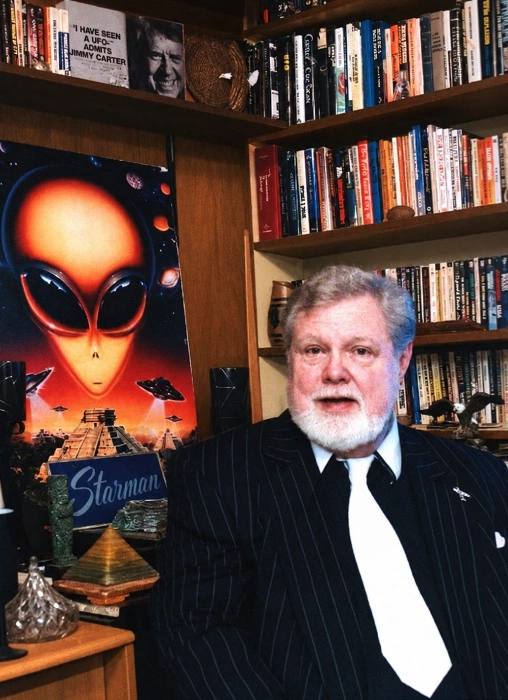
Hayden C. Hewes began investigating reports of unidentified flying objects in Oklahoma City during the formative years of modern UFO research. By the late 1950s, what began as an individual pursuit had developed into an organized investigative effort.
Hewes established what would become the International UFO Bureau, building a network of field investigators, scientific and technical advisers, researchers, witnesses, and correspondents extending across the United States and internationally.
Correspondence as Investigation
Fellow researchers, government agencies, political leaders, astronauts, military officials, witnesses, and others entered the archive because Hewes contacted people directly when he believed they might hold information relevant to a case or question he was pursuing.
One extraordinary early example reached all the way to Soviet Premier Nikita Khrushchev concerning the Soviet Union's historic exploration and photography of the far side of the Moon.
Built Through the Work
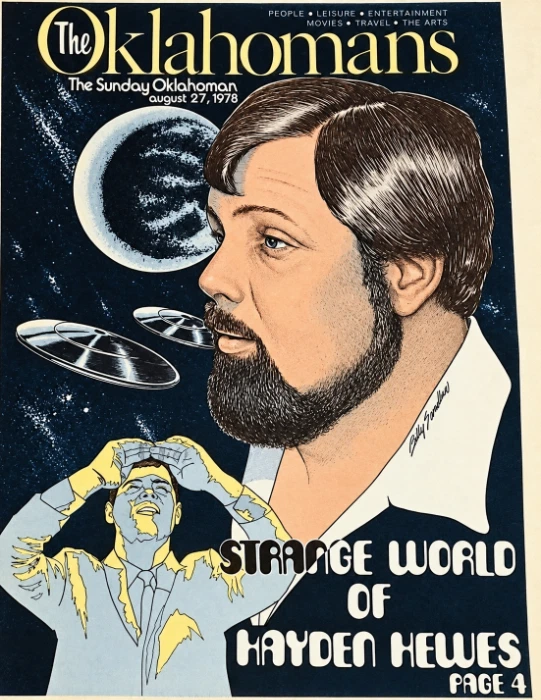
Over the decades that followed, Hewes documented investigations, pursued witnesses and leads, maintained an extensive correspondence network, and preserved the materials that passed through the Bureau's work.
Reports, letters, photographs, notes, clippings, publications, and other surviving records accumulated as part of the investigative process rather than as a collection assembled after the fact.
The result is more than a collection of UFO literature. It is the surviving working archive of an investigator and organization active across multiple early eras of modern UFO history.
Survival and Recovery
The collection's survival did not end with Hewes. Its modern history includes loss of public visibility, recovery, and a renewed effort to preserve and open the material.
2017
After Hewes's death, the collection survived largely outside public view. Decades of material remained, but its long-term future and accessibility were not yet assured.
2023
Mindy Tautfest recovered the Hayden C. Hewes Archive, beginning a new chapter in its history and helping ensure that Hewes's decades of work would be preserved rather than lost.
Now
The collection became a cornerstone of the re-established International UFO Bureau, where cataloging, digitization, research, preservation, and public access continue today.
Preserved for Public Research
The Hayden C. Hewes Archive now serves not only as a record of the past, but as a living research resource connecting work that began in Oklahoma City in 1957 with a new generation of researchers able to examine the documents for themselves.
Preservation remains an ongoing process. Additional material will continue to be cataloged, digitized, reviewed, and made available as work on the collection progresses.