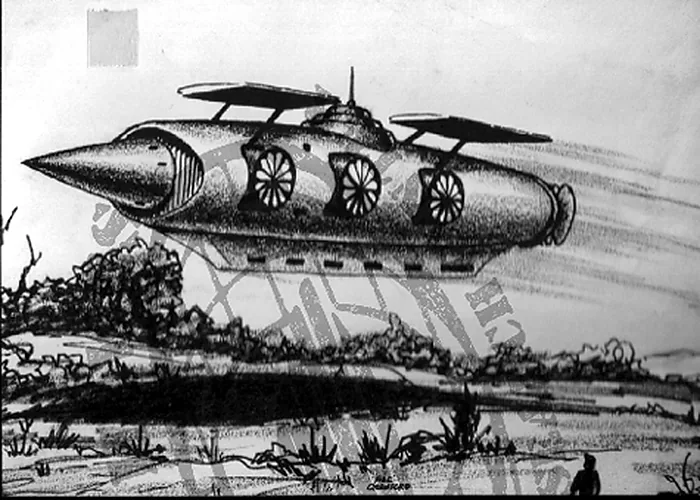
On April 17, 1897, people in Aurora, Texas, were said to have seen a slow-moving “airship” over town. A newspaper story printed the next day said the craft hit a structure on the land of Judge J. S. Proctor. It then exploded, spread wreckage across the area, and killed its pilot.
The story made an even stranger claim. It said the pilot was so unusual that people at the scene believed the body was “not an inhabitant of this world.” Strange writing was said to have been found in the wreckage. Pieces of metal were also collected. The pilot was said to have been buried in Aurora Cemetery.
More than 70 years later, those claims brought UFO investigators, reporters, scientists, and curious visitors back to Aurora.
The more they looked into the story, the less simple it became.
Aurora Before the Airship
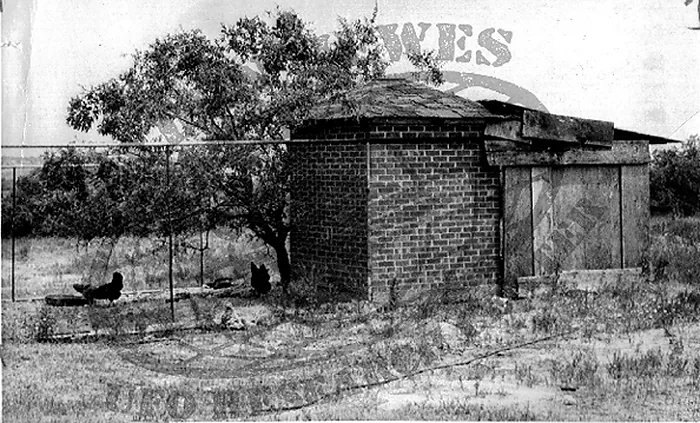
Aurora was already having a hard time before the airship story appeared.
The town had once been a busy local community with businesses, schools, churches, and many more residents. That began to change before 1897.
An epidemic hit the area. Fire damaged part of the business district. The town also lost hope of getting a railroad line. A record kept in the Hewes collection says the railroad plan ended in January 1891, about six years before the reported crash.
Later, researcher Lou Farish told Hewes about one possible reason for the airship story. He thought local writer S. E. Hayden may have hoped the strange report would bring attention back to Aurora and perhaps help the town.
That idea is possible. There is no proof that it is true.
The Story S. E. Hayden Told
The newspaper story that made Aurora famous was written by local cotton buyer and reporter S. E. Hayden.
Hayden said the airship moved slowly over town before it hit Judge Proctor's property. The blast was said to have damaged a water tank and flower garden. Pieces of wreckage were said to have landed across several acres.
Hayden also wrote that the pilot was found in the wreckage. He said T. J. Weems, described as a government signal officer and an astronomy expert, believed the pilot came from Mars.
Years later, IUFOB researchers found a problem with that claim. They concluded that the T. J. Weems tied to Aurora was actually Jeff Weems, the town blacksmith .
That was one of several details that made investigators question how much of the old newspaper story was accurate.
The Missing Voice of Judge Proctor
One important person is missing from the surviving record: Judge J. S. Proctor.
The crash was said to have happened on his land. His windmill or windlass was said to have been destroyed. His water system and garden were also said to have been damaged.
Yet no direct interview, letter, or first-person statement from Proctor has been found in the Hewes material reviewed for this archive.
A much later story makes this even more interesting. In 1973, Newsweek reported that an older woman had written Aurora historian Etta Pegues. She said people did not hear about the crash:
“until we got the little paper Judge Proctor put out . . . I remember my father remarked that the judge outdid himself that time.”
That memory came many years after 1897, so it cannot tell us for sure what Proctor wrote or believed. Still, it raises a fair question. Was Proctor only the landowner named in the story, or did he also help spread it?
So far, the surviving Hewes files do not answer that question.
Witnesses—or Memories of Witnesses?
When the case became popular again in the 1970s, investigators looked for older residents who might remember 1897.
Several strong stories came from those interviews.
C. C. “Charlie” Stephens said his father had seen a low-flying, cigar-shaped craft before the crash. Mary Evans remembered her parents talking about the event. G. C. Curley remembered hearing about an airship and injured pilot from people who had gone to Aurora.
Some newspaper stories first presented these accounts as eyewitness reports.
IUFOB later took a more careful view. Its investigators found that the surviving people had not seen the crash themselves . Most of what they knew came from parents, friends, or stories heard when they were young.
Their memories still matter as local history. But they are not the same as direct eyewitness evidence.
The Search for Physical Evidence
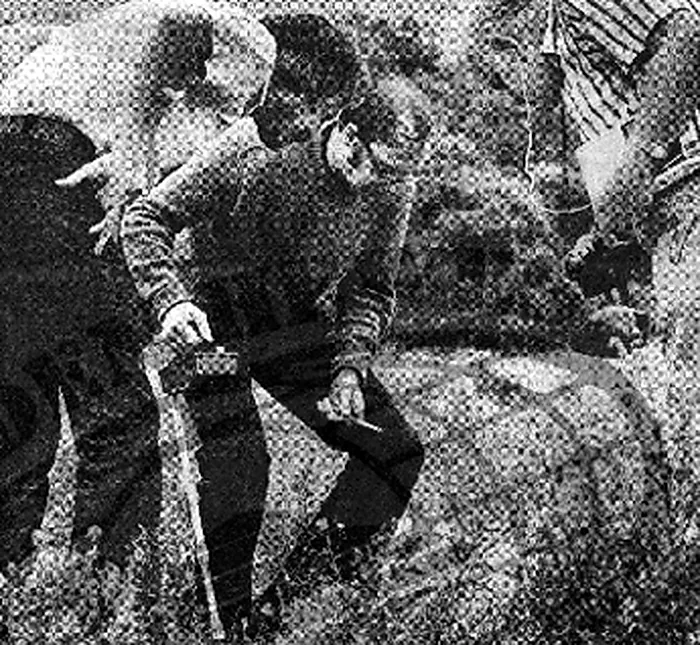
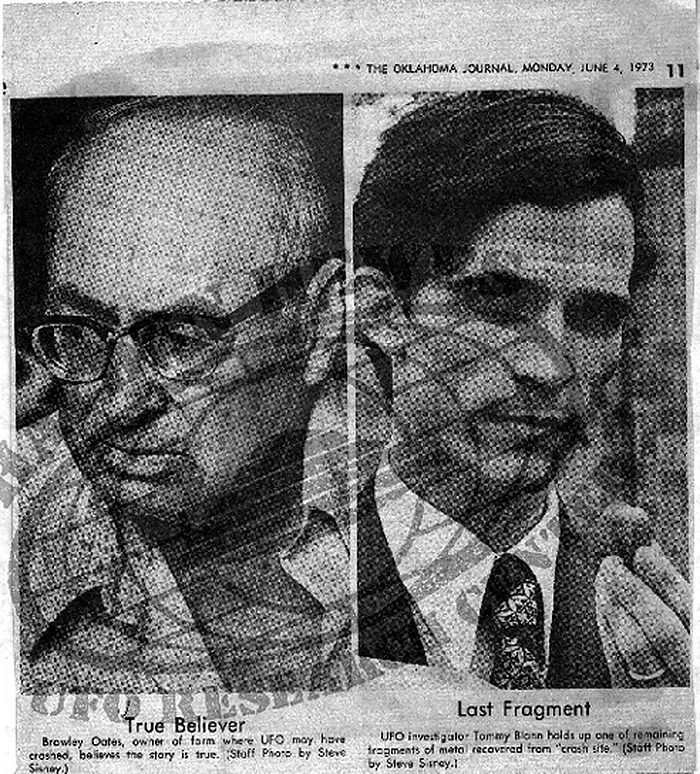
In 1973, investigators went back to the property many times. The land was then owned by Brawley Oates.
They found pieces of metal near the reported crash site. At first, some pieces seemed unusual. One sample was said to contain a lot of iron but showed little or no pull from a magnet. Another was described in news reports as an aluminum mix that could not have been made in 1897.
For a short time, the metal looked like the strongest physical clue in the case.
Later lab tests changed that.
Samples were identified as common materials. They included low-carbon steel, wrought iron, zinc alloy, and antimonial lead. The lab found nothing unusual in their structure or makeup.
Hewes later said another lab described material from the site as normal cast aluminum.
In the end, the metal did not prove that an unknown craft had crashed in Aurora.
The Grave in Aurora Cemetery
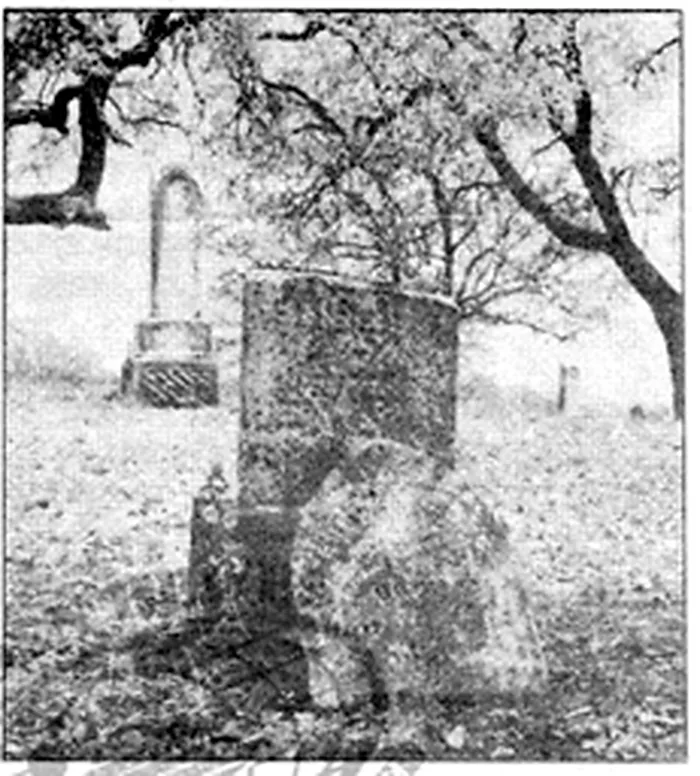
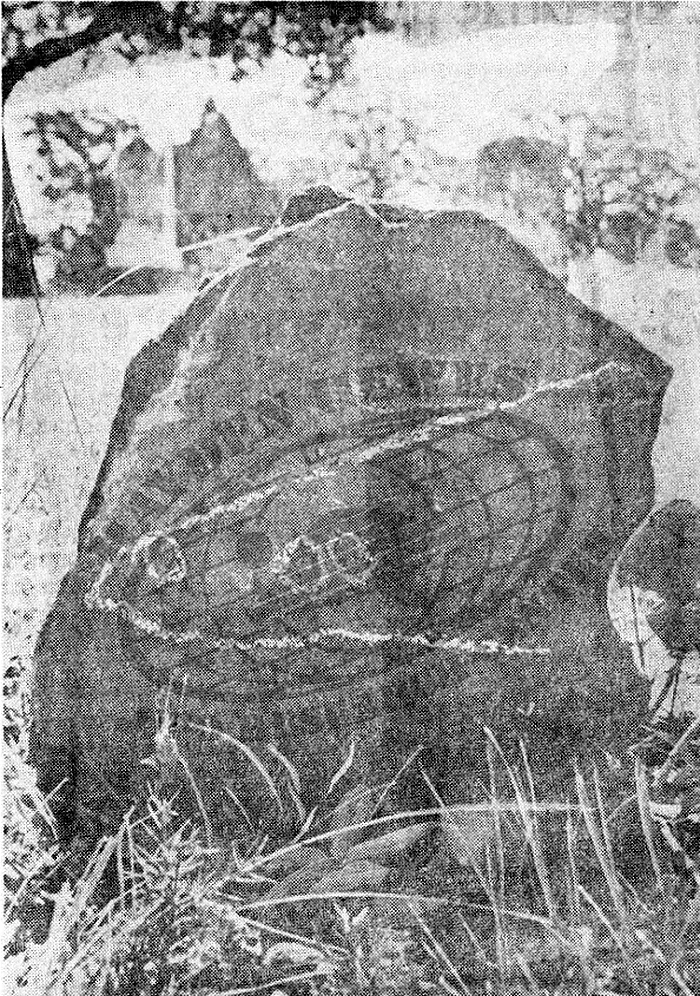
Investigators also believed they had found the possible grave of the reported pilot.
Metal detectors gave signals at an old grave. Investigators thought those signals were similar to ones found near the reported crash site. The grave also had an unusual handmade marker.
As the case gained attention, more visitors came to the cemetery. That soon caused problems.
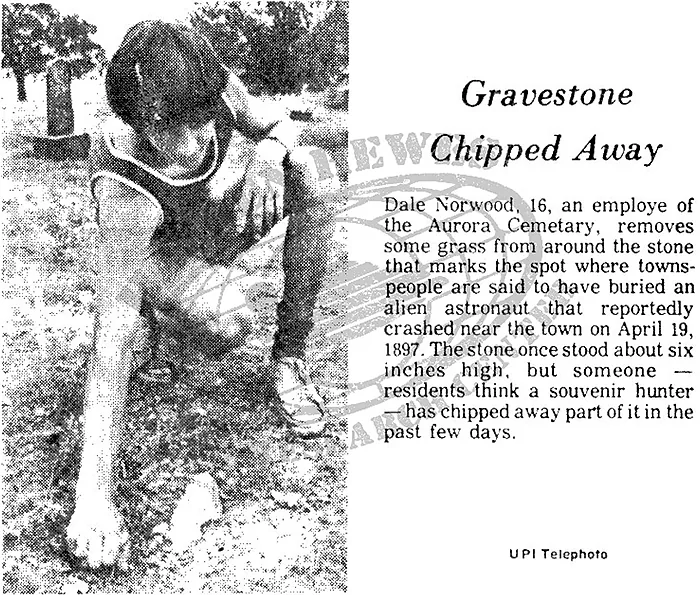
Markers were damaged or stolen. Local residents worried about people digging without permission. The Aurora Cemetery Association opposed opening the grave and later limited further work there.
IUFOB then asked about using subsurface radar. That method could have looked below the ground without opening the grave. The Cemetery Association said no to that request too. IUFOB said it would respect the decision.
Because of that, the contents of the grave were never confirmed.
The Case for Aurora
There are good reasons why the story has lasted.
The original newspaper report really was printed in 1897. It appeared during a much larger wave of “airship” reports across the United States. The Aurora story was not invented by UFO writers in the 1950s or by investigators in the 1970s.
Some local residents also remembered hearing about the event long before the case became famous again. Metal was found on the property. An old well or related structure was still there. Several generations of Aurora residents knew some form of the story.
There may be some real history behind the legend.
That does not mean every part of the legend is true.
The Case Against Aurora
Almost every major piece of evidence became weaker when investigators looked at it more closely.
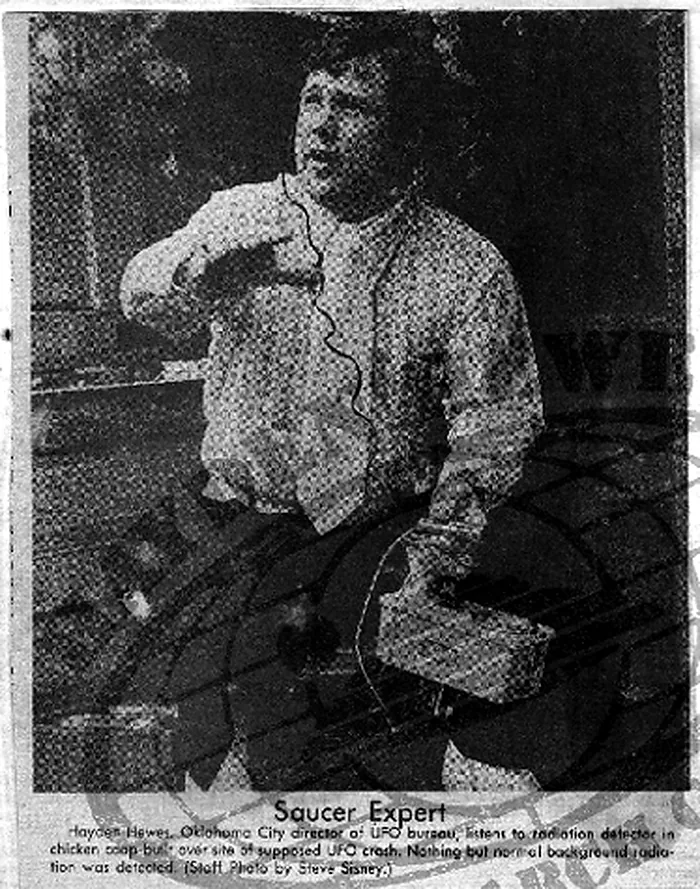
Most witness stories were secondhand. The unusual metal turned out to be common material. Radiation tests found normal background levels.
Details also changed from one account to another. Reports did not always agree on the date, whether Proctor had a windmill or windlass, who the witnesses were, or what the wreckage looked like.
The original story also appeared during a national airship craze. Other newspapers of the time ran strange and dramatic airship stories too.
Even people working on the case knew publicity was shaping the investigation. In a May 23, 1973 letter to Hewes, Dallas Times Herald writer Bill Case said they would need to “scrounge ‘new leads’ to keep the story ‘alive.’”
That does not prove the story was made up. It does show how news, public interest, and the investigation became mixed together.
What Did IUFOB Conclude?
IUFOB spent about two years looking into Aurora.
Investigators spoke with local residents. They searched the property, tested metal, studied the cemetery, checked historical records, and looked for a way to examine the grave.
The Bureau did not say that it had proved an alien spacecraft crashed in Aurora.
IUFOB's later case files showed several possible views. Some people believed the story was a legend. Others believed a craft really crashed. Another view was that something happened, but the story grew over time.
Without stronger evidence, IUFOB ended its active investigation and listed the case as unresolved.
An Unresolved Piece of UFO History
The Aurora story has lasted because there is enough real history around it to make a simple answer difficult.
A newspaper report was printed in 1897. The people and places named in it were real. Aurora was a town in decline. Investigators returned many years later. Witness stories were collected. Metal was tested. A grave was searched. Reporters, scientists, UFO researchers, and local residents all tried to decide what the evidence meant.
One question is still at the center of the case:
Did an unknown aircraft really crash in Aurora, and was its pilot buried there?
The surviving evidence does not prove that an alien spacecraft crashed in Aurora. It also does not tell us exactly how every part of the story began.
The Hayden C. Hewes Archive keeps the case as investigators found it: a mix of claims, evidence, questions, conflicts, letters, and unanswered details.
Read the documents. Compare the accounts. Follow the investigation. Draw your own conclusion.